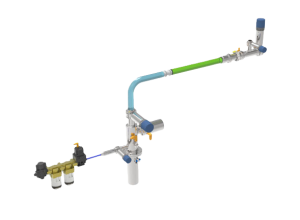
Ever more common accepted cleaning domain, fluid displacement supply a significant advantage in managing cleaning agents. This cutting-edge technique minimizes discard of pure cleanser by utilizing a propeller to drive it through the tube – effectively emptying the receptacle. Grasping the essentials of these mechanisms can yield lower costs and a enhanced environmentally responsible practice.
Pigging Methods Reshape Detergent Logistics
The customary method of delivering fabric-washing detergent presents notable challenges, often leading to spillage and poor performance. However, a new approach – pigging systems – is wholly varying how enterprises handle these substantial materials. These systems utilize a pliable "pig," a dense equipment, to press the detergent through a channel, successfully eliminating air pockets and ensuring nearly total product retrieval. Benefits include shrunk refuse, augmented performance, and a lowered environmental consequence.
- Decreases detergent waste
- Magnifies functional effectiveness
- Facilitates environmentally sound practices
Improving Soap Flow by Pipeline Pigging
Improving efficiency in textile washing facilities often involves addressing problems related to detergent dispersion. Traditional systems frequently experience discard due to residual detergent clinging to pipes and lines, leading to increased operational costs. Pigging techniques, originally utilized in the oil industry, provides a compelling resolution to this issue. By sending a “pig”—a specialized mechanism—through the detergent tubes, these systems effectively discard remaining product, maximizing usage and minimizing inefficient material. This ultimately results in a more responsible and prudent laundry procedure for entities.
Perks of Cleaning Pigging for Cleaning Product Generation
Implementing pigging systems offers important benefits for fabric soap development facilities. These systems efficiently eradicate product films from process conduits, minimizing overflow and reducing pauses during washing. Consequently, overall performance is strengthened, resulting in minimized charges and a more sustainable method. Furthermore, cleaning pigs promotes to preserving integrity by preventing pollution between batches and ensuring a purer final item.
Minimizing Loss and Boosting Output: Washing Product Pigging
Laundry fabric soap manufacturing can cause significant discard material, but a forward-looking process called “pigging” offers a approach to reduce this difficulty. This procedure involves using a elastic tool, the "pig," to transfer remaining solution from the production lines, often rejected as unusable. By retrieving this previously discarded laundry solution, companies can prominently minimize budgets and advance overall operational efficiency. The environmental advantages are also important, as it diminishes the amount of scrap sent to dumps.
- Minimizes Material Expenses
- Boosts Production Effectiveness
- Diminishes Environmental Footprint
Adopting Pigging Technology for Fabric Soap Processes
To maximize yield and reduce downtime in your laundry washing manufacturing facility, investigate setting up a pushing system. This progressive system completely removes lingering material and residue from tubes, as a result improving functionality and shrinking discard. A well-designed scraping program can also boost the term of your ductwork organization, giving rise to notable cost economies and a more environmentally conscious process.
Green Alternatives for Laundry Cleaner Pigging
The practice of laundry detergent reusing presents a persuasive path towards a improved environmentally responsible future. Typically, leftover wash product remains in containers become laundry detergent pigging system junk material, leading to conservation load. However, this innovative process involves gathering these retained portions and reclaiming them into beneficial products, namely plant food or technical components.
- Diminishes garbage mass
- Minimizes material drain
- Offers a closed-loop commercial model
Developing Slugging Systems for Laundry Soap Needs
The construction of a removal unit for textile soap functions presents exclusive challenges. Detailed examination must be given to the viscosity of the substance, which can modify considerably depending on structure and heat. Additionally, the harshness of certain ingredients necessitates the use of tough propeller material and correct channel manufacturing. Capable cleaning necessitates a definite load design to ensure complete elimination of excess mixture and prevent jams or degradation to the pipeline system.
Repairing and Maintaining Laundry Cleaner Pipeline Units
Regular routine support and rapid troubleshooting are vital for maximizing the reliability of laundry cleaning pigging mechanisms. Usual issues consist of blockages within the pipeline, cleaning agent buildup hindering flow, and valve breakdowns. Regularly planned inspections, comprising manual examinations of hoses, junctions, and the pig itself, are imperative. Correcting these problems swiftly – often through cleaning the system or substituting worn components – can cut costly idle time and raise the usefulness of the entire ensemble.
