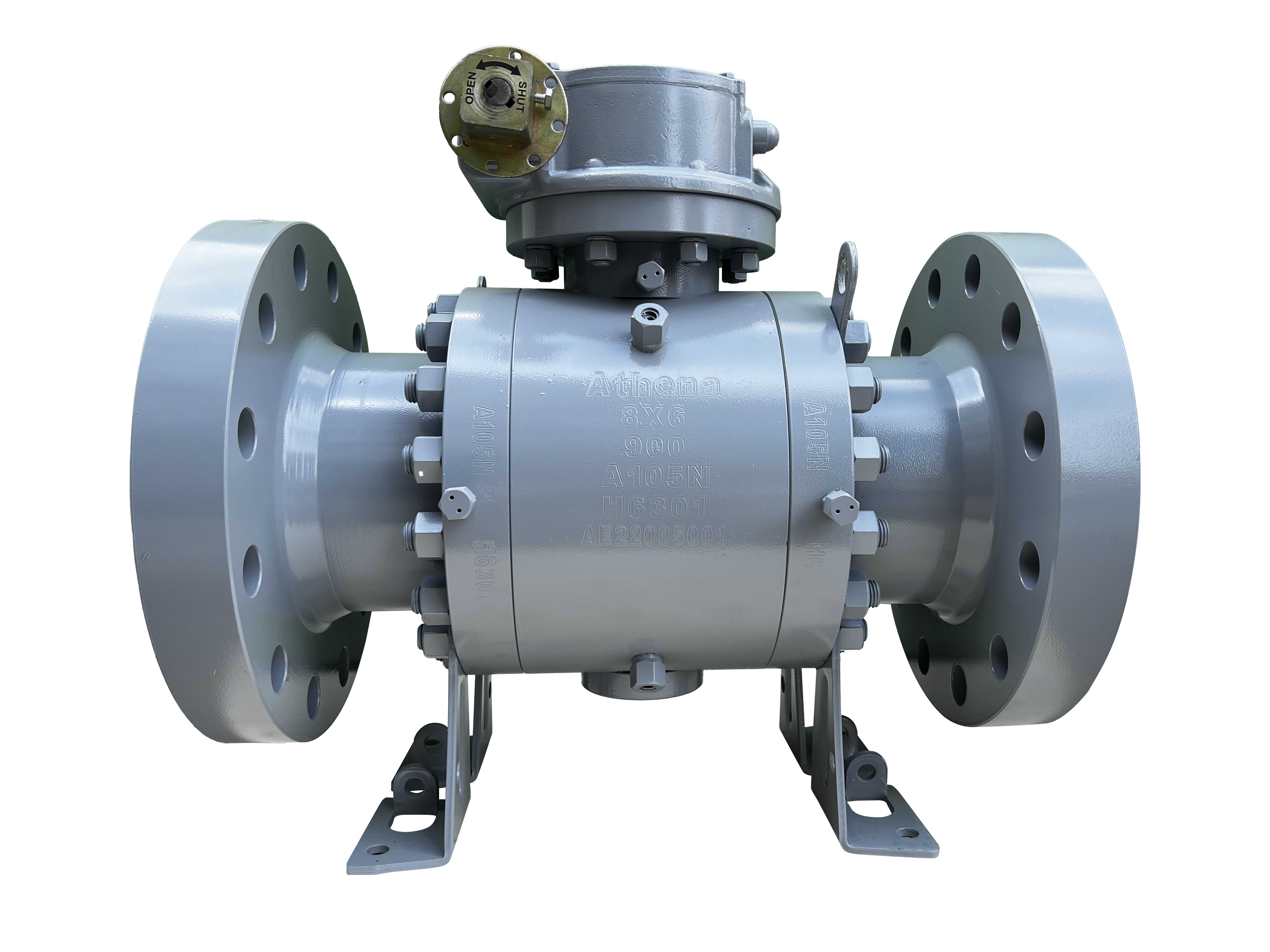
Mastering Gate Valves: Classes, Deployments, and Care
Security Switches, one fundamental appliance for disconnecting flow in ducts, grant a clear method for starting or discontinuing fluid transit. Typical models include oblique gate, parallel gate, and slitting gate, each suited for distinct uses, such as fuel extraction, liquid filtration, and manufacturing plants. Recurrent care, including systematic assessments, lubrication of active elements, and uncommon exchange of deteriorated stoppers, is indispensable for guaranteeing unfailing working and improving the mechanism's lifespan}.Opting for A Movement Regulation
If building any fluid management, selecting a suitable regulator model is paramount for reliable conduct. Globe valves and stop valves are widely chosen, but handle fundamentally different assignments. Gate-style valves are mostly developed for completely closing flux and are not effectively made for moderating fluid velocities. On the other hand, modulating valves offer great strengths for meticulous fluid adjustment and are typically opted for where altering flow rates are necessary. Reflect on the specific application's particular necessities before finalizing such last selection.
- Gate-style valves - Optimal for open-shut direction.
- Modulating valves - Advantageous for throttling fluid.
One-way Valve Functionality: Avoiding Return Flow in Pipeline Arrangements
Anti-return valves are necessary sections in many institutional conduit assemblies, designed to confirm mono-directional current of elements. Their core job is to restrain retrograde flow, thereby could weaken apparatus, degrade goods, or disturb functions. They usually function automaticallyly, allowing stream in one vector while strongly stopping movement in the opposite line.
Ball Valves: Strengths and Negatives for Production Operation
Spherical valves are frequently employed in operational settings due to their rudimentary design and trustworthy operation. Nevertheless, it’s important to comprehend both their constructive aspects and potential problematic characteristics. Regarding the benefits, ball valves offer prompt shut-off capabilities, first-rate flow control when applied in a partially Globe Valve position (though regularly not recommended for prolonged throttling), and are moderately cost-effective compared to some valve forms.
- Effortless Maintenance
- Slight Load Drop
- Effective Locking
Inspection of Valve Classes: Gate, Globe, Check, and Ball
Recognizing the differences involving valve types is important for selecting the proper solution for a certain assignment. Let’s concisely scrutinize four standard valves: gate, globe, check, and ball. Gate instruments provide minimal impedance to flow when totally free, making them perfect for significant flow deployments, but enduring poor regulation capabilities. Globe devices, in contradistinction, possess a segment that positions against a cavity, allowing for fine-tuned flux regulation, although at the sacrifice of excess fluid decline. Check apparatuses are designed to inherently prohibit backwash, functioning as a forward-only defensive attribute. Finally, ball valves make use of a spinning rounded piece with a vent to allow passage, affording immediate activation and closing with generally low load fall.
- Gate Valves: free channel
- Globe Valves: precise control
- Check Valves: avoid reflux
- Ball Valves: swift exposure
Opting for the Best Apparatus: A Instruction to Cutoff, Sphere, Check, and Ball
As operating with vaporous stream, determining the optimal apparatus is paramount. Gate controllers offer limited constraint and are best for clear deployment, but cannot well-suited for balancing. Globe mechanisms provide fine movement regulation and are better for applications requiring mutable flux rates. Check instruments are self-operating and enable movement in one track only, restricting reflux. Finally, ball mechanisms offer instant deactivation and are generally used in heavy-duty situations due to their durable configuration.
Addressing Common Malfunctions in Gate, Globe, and Ball Valves
Managing troublesome gate, globe, and ball instruments can be challenging, but most common issues are smoothly solved with a bit of knowledge. Note some typical problems and probable solutions. For gate regulators, identify oozing around the housing, which ordinarily indicates a faulty ring. Globe systems are vulnerable to seizing due to impurities – perform periodic personal movement or clearing to eliminate the obstruction. Ball mechanisms can experience seal leaks if the globe is corroded; refitting the packing is typically the most suitable course of action.
- Scrutinize for rust
- Authenticate correct application
- Think about trained help if the complication continues
Each Function of Uni-directional Valves in Supporting Framework Protection
Reflux Prevention assemblies function a critical duty in augmenting total framework safety across several branches.These avert inversion of materials, which would produce substantial menaces especially pollution of stock, installations malfunction, and even employees illness. For, in a fluid network, one-way instruments safeguard the provision from ending up infected by backward force. Besides, these mechanisms facilitate reliable ceasing steps and limit the potential for unplanned leakage happenings.
Visualize that following situations:
- Prevention of vital devices from degradation due to reversed tension.
- Assuring the integrity of drinking liquid sources.
- Avoiding harmful element counterflow into restricted localities.
Investigating Flow Regulator Types: Gate, Globe, Ball, and Check
While all serving as essential components in fluid handling, gate, globe, ball, and check valves differ significantly in design and application. Gate valves offer minuscule flow difficulty when fully available, ideal for exclusion but