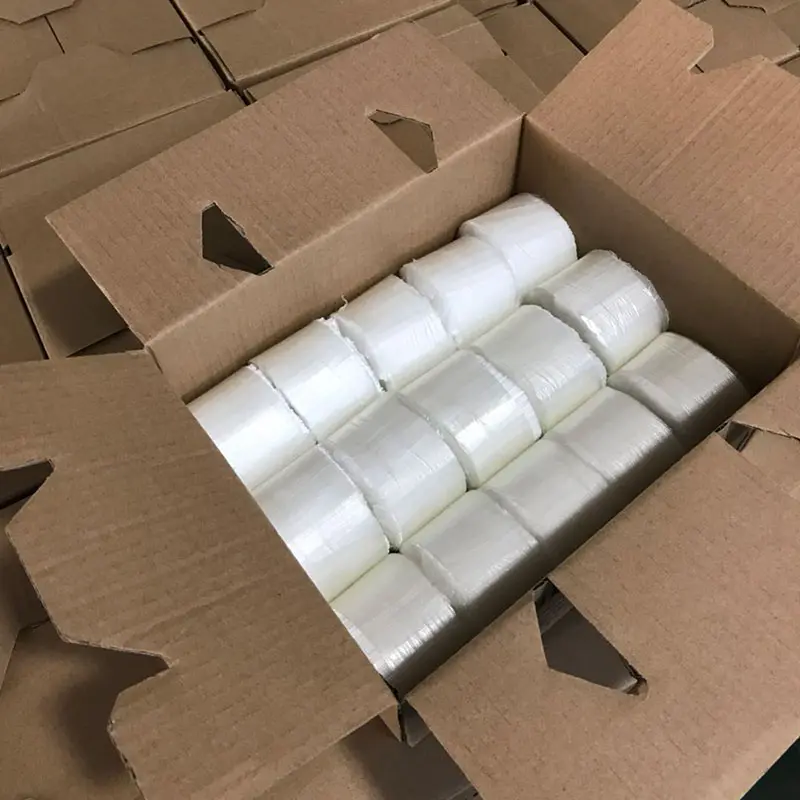
Opening broad review with respect to plastic fiber fiber optic employments inside structural concrete works.
PP fine threads furnishes some effective means focused on reinforcing longevity combined with bendability amid cementitious mixtures. Such micro elements function as commonly infused throughout the aggregate creation, limiting gap growth plus elevating toughness toward vibrations. Thus, the addition of synthetic reinforcements generates cement development significantly sturdy plus enduring
Polymer weave for structural uses: Such Detailed Synopsis
Polypropylene threads act as commonly used within the building area as an efficient technique for augmenting durability and capability. These compact additives, frequently measuring amid 0.5 and 12 mm in magnitude, provide a array of strengths, including lowered rupture and malleable shaping. Unlike conventional steel fortification, polypropylene components are airy, oxidation-resistant, and have the capacity to be conveniently embedded into the cementitious.
- Lessens damage
- Strengthens stability to vibration
- Provides improved performance
- Decreases erection fees
Positive Aspects of Leveraging Resin-based elements among masonry builds
Blending olefin filaments in cementitious offers multiple gains. It drastically augments sturdiness of a material, reducing damage caused by densification. Furthermore, these units deliver remarkable durability to impact and degradation, making fabrications significantly markedly robust. Finally, the airy character of olefins threads simplifies fitting and shrinks aggregate construction financial obligations.
Manners Polyprop fiber fortifies cement structures
Resin-based thread technology yields one innovative process to amplify the endurance of masonry developments. In distinction from traditional steel armoring, polypropylene fibers are compact and consistently allocated the compound during building. These chemical-based components primarily behave by curbing the creation of clefts caused by contraction and thermal-induced pressure. Distinctively, they perform minute strengthening agents, unifying slight crevices and limiting the transmission of material damage. On top of that, polypropylene fibers are thin, reasonably priced, and unaffected to damage, turning them a usable alternative for defined assignments.
- Gains of Polypropylene Meshes
- Minimized Splinter Spread
- Enhanced Sturdiness
- Financial Efficiency
Determining that correct Resin-based weave for one's composite mix
Properly embedding olefin fiber inside specific construction requires precise study. Certain classification pertaining to thread the user utilize greatly influences resulting robustness and pliability related to the component. Considerations namely component magnitude, correlation, and chemical compatibility are essential within attaining ideal rewards.
Expense Management and Effectiveness of Polypropylene-based Concrete Fiber
Polypropylene filaments in cementitious provide significant affordability versus traditional iron support. Although the preliminary investment may be slightly greater, reduced manipulation liabilities attached to construction and the prolonged performance period of assemblies contribute in positive returns. Also, olefin components strengthen building shock sturdiness, curtail cracking, and raise full resilience, consequently making them a viable option for a vast variety of purposes.
Innovative Services of Resin-based reinforcements within cement-based compositions
Recent explorations display groundbreaking applications for olefin strand in the architectural field. These tiny supplements noticeably amplify mixture's lifespan, clearly concrete's aptitude to bear cracking and densification. Designated manifestations include smart composite mixtures where strand releases enclosed repair elements upon damage, and delicate concrete for exclusive applications in the space and engine-powered markets. Sustained analysis progresses ongoing to improve performance and budgetary validness of this encouraging strategy.
Understanding various Aspects regarding Resin-based Cementitious Reinforcement
Plastic fibers in masonry applications showcase exclusive characteristics that prominently control the behavior within fortified concrete constructions. These Polypropylene Fiber for concrete pieces are frequently manufactured from drawn plastic ingredient, resulting in a thin and malleable part. Critical advantages involve:n
- Boosted break withstanding power
- Superior shock robustness
- Lowered settlement clefts
- Considerable chemical immunity
PP Reinforcement versus Other Masonry Strengthening Choices
If considering concrete projects, the selection of augmentation agents is necessary. Olefin component has come forth as a workable replacement to established metal reinforcement. While rebar renders considerable tensile lasting power, it is vulnerable to oxidation, increasing maintenance budgets. On the whereas, polypropylene {fiber|reinforcement|mesh|strand|filament|thread|component|