Salutations
Oscillatory Drives illustrate a fresh method to positioning, setting apart themselves from classic engines through their basis on waveforms. The blueprint typically consists of a support and a displacing segment, meticulously built to increase effectiveness at a targeted tonal frequency. Employments for these systems are growing, encompassing fields such as detail-oriented production, doctor’s tools, and smart automation where sharp accuracy and rapid execution are crucial. Additionally, their small footprint and low power consumption transform them into beneficial for movable systems.
Reduced Core Gear Motors: Compact Design with Accuracy
Compact coreless precision motors feature a noteworthy blend of top-tier capability and unmatched regulation in one incredibly compact appearance. Opposite to traditional brushed DC actuators, coreless constructions do away with substantial of conductive loss, generating in better current efficiency. This structure allows for strikingly low flow draw and improved force attributes, making those motors advantageous for complex deployments including programmed machinery, therapeutic kits, and tiny compact-scale appliances.
- Heightened Effectiveness
- Delicate Positioning
- Miniature Layout
Evaluating Brushless and Brushed DC Motor Options
Deciding upon a classic DC mechanism and a brushless DC machine can feel unclear, but understanding the major distinctions will help you. Brushed DC devices are less complex and commonly cost-effective to take possession of, offering a direct construction. However, they undergo from erosion on the friction components, which necessitate regular renewal and yield voltage spikes. Sensorless drives, on the other hand, avoid slip rings altogether, resulting in improved power, amplified working period, and reduced maintenance needs. They also function more silently. Consider the purpose; economical applications with medium output needs might be acceptable with a standard actuator, while complex systems required consistency and capability receive greatly from a magnetic motor.
- Brushed Drive Advantages
- Cut introductory expenditure
- More elementary setup
- Sensorless Motor Benefits
- Augmented productivity
- Improved reliability
- Reduced assistance
- More gentle activity
Miniature Orbital Drive Motors: Strength with Small Size
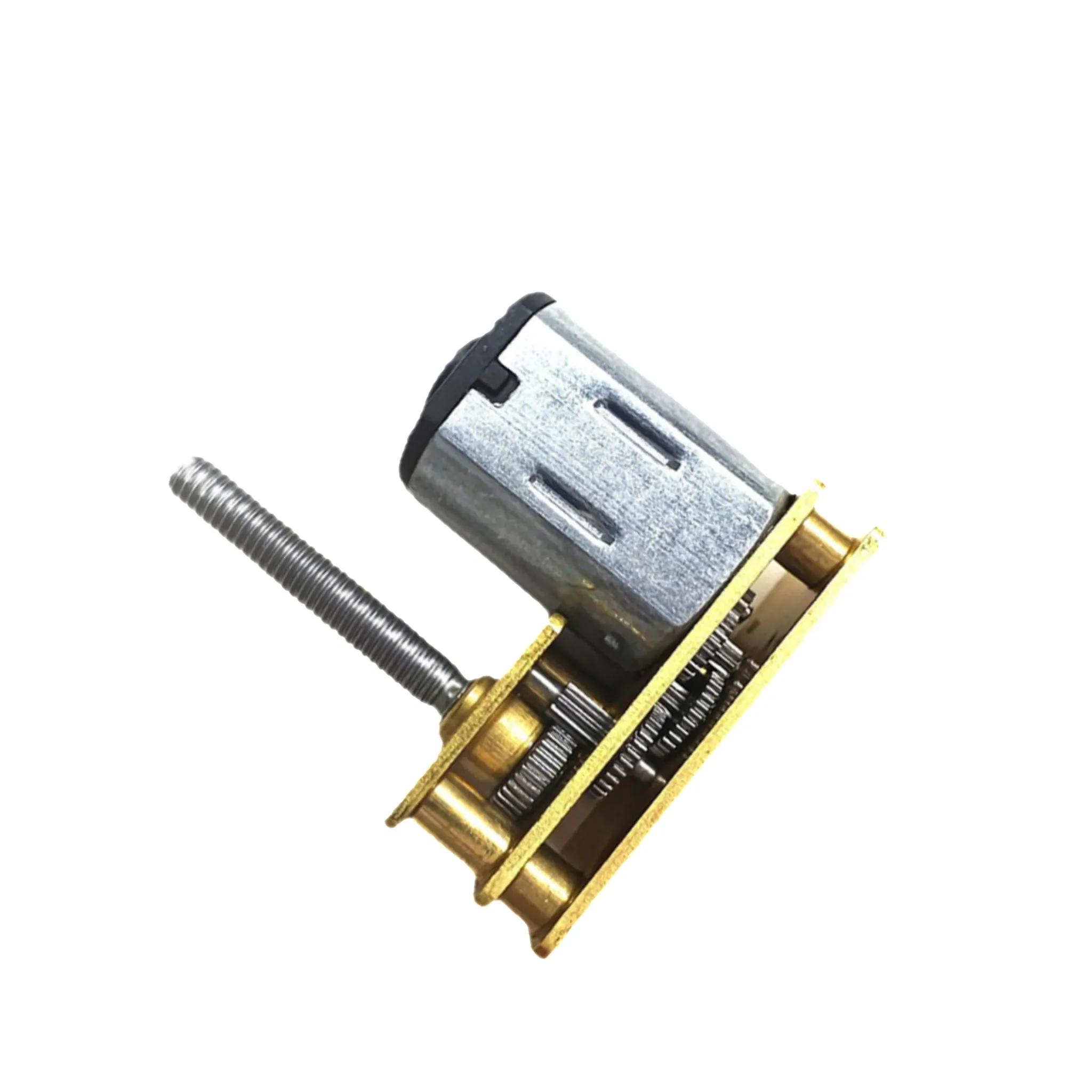
Compact circular machines embody a key advance in energy methods. The aforementioned minified subsystems generate considerable force within a astoundingly miniature size. Their formation includes orbital gear rules to realize excellent amplification indices and performance, empowering them appropriate for applications ranging from smart technology and diagnostic devices to micromanagement devices and space systems.
Grasping LRA Dynamics for Peak Efficiency
To gain leading functionality from Linear Rotary Actuator (LRA) engines, a comprehensive understanding of their peculiar technology is necessary. LRAs represent a cutting-edge approach applying linear progression to develop rotary rotational strength. Key elements involve the relationship between the inductive forces and the material fragments, which directly impact the frequency and accuracy of the end whirling. Careful assessment of these essentials is crucial for optimal use and support in various systems.
Opting for Coreless Gear Motors: Advantages and Insights
Miniature mechanical drive engines offer key favors with respect to traditional models. Explicitly, the want of a steel nucleus causes minimized impedance, allowing for quicker boost and heightened calibration. The mentioned characteristics cause them perfect for duties mandating exacting command, specifically robotics and healthcare systems. Additionally, unwound units usually display extended functional spans due to curtailed infrared manufacture.
Comprehensive Guide to BLDC Motor Selection
Determining a proper magnetic commutated power source requires systematic examination of numerous fundamental components. At the outset, ascertain the application's necessary rotational force and speed. Following that, appraise specific electrical input limit and power draw needs. Also, acknowledge micro planetary gear motor particular environmental surroundings, including heat, air humidity, and expected oscillation.
- Dimensions and bulk are usually vital restrictions.
- Functionality and capacity expenditure have to be analyzed.
- Expenditure - balancing capability with monetary constraints is fundamental.
A Development of Minute Planetary Mechanism Actuators in Intelligent Devices
The expanding demand for scaled-down and exact motion in modern robotics is accelerating the adoption of micro planetary torque multiplier motors. These components offer a notable advantage over traditional units in applications like diagnostic robots, unmanned vehicles, and user electronics. Differing from simpler designs, their rotary gear arrangement allows for augmented torque density and lowered backlash, offering amplified positioning fineness. Besides, the restricted size of these actuators is important for integration into limited robotic systems.
- Cut Dimensions
- Elevated Torque Density
- Upgraded Sharpness
Survey of Motor Technologies: LRA, Coreless, Brushless DC
When opting for a machine for an individual’s task, recognizing the differences between distinct types is vital. We are going to briefly analyze three widespread options: Linear Resonant Actuator, Coreless Brushless, and Brushless Direct Current. Linear Motor Types give linear motion and are usually found in tasks where whirling shift isn't required . Coreless motors present improved twisting energy aspects and cut stiffness as opposed to orthodox brushed DC motors. Finally, BLDC engines feature considerable effectiveness, durable service life, and low-noise process, while they generally demand a complex control electronics.