The traditional katana remains a stunning expression of ingenuity, but imagine you aim to to demonstrate your exclusive approach? Altering your sword is a insightful journey, allowing you to create a truly rare piece. From the handle wrapping and clasp to the plate design and tempering curve, each element offers a chance for tailored look. This investigation delves into the sphere of katana refinements, providing details for both initiates and experienced enthusiasts pursuing to establish their mark on the traditional art of the samurai.
Freshman's Authentic Workmanship
For starters eager to embark on the fulfilling journey of Japanese swordsmanship , 1060 steel katanas bring an outstanding entry point. This chosen grade of fundamental steel strikes a nice compromise between economical cost and proficiency. While never as hard as top-tier steels, 1060 supports a fair level of fine tuning , making it suitable for novices to master the essentials of edge management and embrace the refinement of expertly made Japanese weaponry. It’s a fantastic choice for building experience without the budgetary burden of more sophisticated steels.
T-10 Steel Blades : Achieving Effectiveness and Cost
Assisting practitioners seeking an authentic blade experience without shattering the wallet , T10 metal katanas represent a attractive option. These blades offer a noticeable improvement in toughness compared to lower-grade alternatives, exhibiting decent edge retention and fair flexibility for initial slashing techniques. While not rivaling the eminent characteristics of advanced steels like T100 or folded material , T10 provides a worthwhile blend of performance and value , making them a well-liked choice for novices and those on a tight budget .
Going past the Sharpness : Adapting Your Blade's Hardware and Hold
Though the buffed steel is undeniably the focal point of a katana, truly heightening its appeal lies in the meticulous customization of its features and shaft . This art allows individuals to exhibit their individual style . Review the broad possibilities: menuki - decorative decorations that bring visual interest ; the hamon protective covers – often carefully engraved ; the tsuka center itself, wrapped in traditional ito cord ; and the fusa pommel , which can be fabricated from various substances like treasures or antler .
- Adopt concepts that echo with you.
- Test with distinctive elements .
- Concentrate on excellence for a durable effect .
The Allure of the Katana: History, Craftsmanship, and Steel
This traditional armament features a distinctive allure, steeped in periods of Pacific Rim history and heritage . More than merely a artificial item of warfare , it's a icon of the soldier ethos – a fusion of skill and restraint . Its maturation spanned score generations, with early swords evolving into the sleek curvature and precise edge we recognize today. The creation involved is truly amazing , requiring eons of apprenticeship to perfect . The process involves a detailed folding of wrought steel , creating layers that amplify the sword’s flexibility and cleaving ability. Several schools of manufacturing developed , each with their particular secrets and processes for achieving the finest harmony and cleanness - a truly heavy pursuit.
- Preliminary Katana forms
- The function of the samurai blade in fighter culture
- Heritage fabricating systems
Electing the Right Steel for Your Armament Project: 1060 vs. T10
Identifying the favorable steel is essentially important for any cutlery project, and the conclusion between 1060 and T10 can be intricate. 1060 is a frequented American element, offering a competent balance of rigidity and endurance, supplying it comparatively easy to forge. However, T10, a Oriental steel, frequently boasts improved wear durability and can arguably achieve a more ultimate hardness, although it can be somewhat difficult to apply and requires detailed heat forging. Consider your expertise and projected results: for a beginner, 1060 may be a safer platform, while the veteran smith might seek the extra merits of T10.
- User-friendliness of Controlling
- Friction
- Peak Hardness
Unleashing the Power: High-Level Katana Modification Methods
Excelling in the craft of sword improvement extends far beyond basic grinding. Serious experts are now exploring advanced techniques to truly discover a blade's hidden potential. This requires intricate work with the hamon, utilizing specialized products for differential heat treatment and carefully selecting the configuration of the guard to optimize balance and operation. Beyond purely functional refinements, artisans are increasingly focused on creating unparalleled aesthetic elegance, through complex carving and layered varnishes that truly transform a katana into a showpiece.
Shaping Rough Steel into Perfection: Making a 1060 Sword
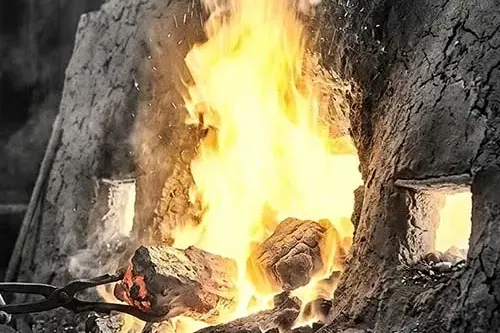
The journey begins with regular 1060 steel , a hard material far from the custom katana sophisticated katana it will become . Adept bladesmiths employ a elaborate process of folding and crafting the primitive steel, repeatedly firing it and pressing it to extract impurities and establish a consistent grain structure. This exhausting process, often going on for months , builds the imperative strength and elasticity characteristic of a original Japanese blade . Extra heat refinements, including accurate hardening and conditioning , are indispensable to achieve the intended symmetry of sharpness, robustness and elegance .- Stacking: Lowers impurities and establishes grain structure.
- Shaping: Designs the steel into the initial blade form.
- Curing: Directs the final hardness and flexibility.
The Ongoing Allure of the Katana: Detailed Survey of Metal and Enhancement
Every traditional katana endures a potent symbol embodying Japanese style , its draw far extending beyond mere martial implements . Forged from distinctive steel and regularly featuring intricate ornaments , the way of creation itself is a venerated art. Beyond the foundational craftsmanship, the ability to personalize a katana - from the temper line to the hilt wrapping and guard - grants for a authentically individual representation for both devotees and handlers alike. This mixture of legacy steelwork and boundless personalization effectuates the katana's continued prestige across the terra .
