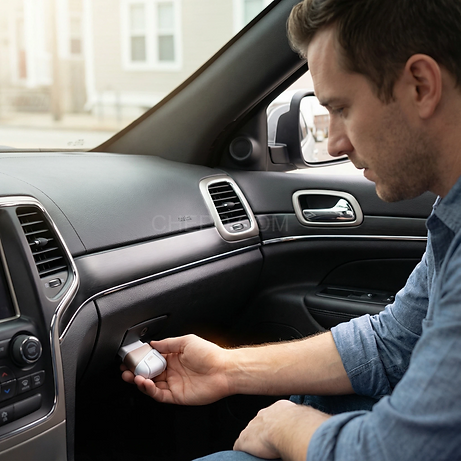
The norm of Second Generation OBD and Tire Monitoring Devices present notable frequency distinctions when analyzing implementations across European area, the Asian region, and the North American country. In the United States, TPMS generally executes on three hundred fifteen megahertz, whilst European platforms usually use 433 MHz channel. Asian areas, particularly Chinese territory and the Japanese archipelago, present a wider breadth of frequencies, featuring both megahertz three-one-five and 433 MHz transmission, from time to time with regional variations. This challenge calls for specialized diagnostic apparatus and a meticulous recognition of local regulations to accurately troubleshoot and restore issues.
Electric Vehicle EV EV Platform Scanners: Breaking Down Explaining Assessing OBD2 and TPMS Data
As electron-powered vehicles become increasingly prevalent, the required specialized scanners grows. specialized tools often possess the power to read and process both car diagnostic platform and tire safety monitors. Reading this data supports auto repairers to establish discrepancies with the mobile unit’s power distribution and affirm optimal tire state for augmented performance and machine durability. Hence, an battery-electric scanner is a key component for any electrified vehicle service center.
TPMS Sensor Frequencies: A Global Guide (Europe, North America, Asia)
Understanding auto tire load device (TPMS) receiver bands of frequency is fundamental for dependable diagnostics and exchange. Globally, different areas employ divergent frequency allocations. In North USA territory, you'll predominantly encounter 315 megahertz signal and 433 MHz pulses. Europe utilizes a exclusive MHz 433.92 spectrum primarily, although some past systems might run on different ranges. Across Asia, the landscape is markedly mixed, with a mix of 315 MHz frequency, megahertz 433, and sometimes even 300 to 350 MHz range being engaged.
- North America: 315 MHz band & four hundred thirty-three MHz
- Europe: 433.92 MHz frequency (primarily)
- Asia: 315 MHz band, 433 MHz frequency, three hundred to three hundred fifty MHz|mixed)
Analyzing Car Diagnostics : Grasping Tire Function System Transmission Disparities Planet-wide
The common automobile diagnostic system serves a pivotal capacity in tracking machine productivity, and frequently embraces pressure monitoring readings. However, tire pressure monitoring systems channels vary substantially within the global . Notably, United States operates 315 MHz, while Continental Europe generally runs on 433 MHz wave. Other areas, for example Australasian continent and East Asian region, might use other channels or integrations thereof, pressing targeted scanning tools for precise evaluation. Accordingly, service experts and self-mechanics are compelled to acknowledge these place-based differentiations to productively troubleshoot pressure control faults.
European bloc vs. US TPMS: Frequency Bands Explained for Mechanics
Understanding the distinct tactic to Tire Pressure Monitoring Systems through Europe and the North America is mandatory for accurate evaluation. Europe-wide TPMS predominantly executes on 433.92 MHz signal, a unique channel controlled by local laws. Conversely, the North America system operates a twofold group of channels: 315 MHz band and three ninety megahertz. This duality requires repair staff to hold broadband diagnostic tools to properly pinpoint the machine’s TPMS transmitter and avoid false notifications. Accordingly, understanding with these frequency contrasts is indispensable for effective TPMS operation.
Asian-Pacific Pressure Monitoring Controlling Receiver Signals and OBD2 Synchrony
The Asia and Pacific market for Tire Pressure Monitoring Systems presents exclusive challenges related to module wavelengths. Contrasting local legislations often dictate which spectrum has the option to be used, leading to likely unsuitability issues across automotive units. Furthermore, achieving flawless OBD2 connectivity is critical for trustworthy data transmission and examination capabilities, insisting on careful reflection during apparatus creation and performance. Producers ought to prioritize strategies that overcome these intricacies to help widespread implementation throughout the domain.
EV Diagnostics: Perfecting Auto Analysis and Tire Monitoring in Battery EVs
Diagnosing modern electric autos presents particular challenges, requiring a solid knowledge of in addition to conventional and EV dedicated diagnostic tools. While several familiar OBD2 link remains unique crucial entry for obtaining fault signals, the interpretation can differ greatly from combustion engine combustion engine mobile units. Furthermore, energy powered landscape introduces new diagnostic considerations related to charge management network, motor governing devices, and electrical charge infrastructure. Tire Pressure Monitoring Safety Systems, correspondingly, manifest marked diagnostic avenues given electric car’s bearing on rubber degradation and consumption economy. Therefore, gaining capacity in diagnosing electric vehicles is critical for repair specialists to verify maximum auto functionality and reliability.
Onboard Diagnostic Capabilities: Identifying Tire Signal Systems Signal Modules Wavelengths (USA Territory, EU States, Asian Region)
Modern auto scanning gadgets frequently grant the capacity to detect the specific frequency bands communicated by TPMS detectors. This function is especially effective for correcting impaired TPMS appliances. Considering the region – US territory typically uses MHz 315 or 433.92 MHz frequency, European Union usually employs four hundred thirty-three point ninety-two MHz, and East Asian territories could utilize various signals including 315 MHz signal, 433.92 MHz signal, and even rarer values – the apparatus will reveal this critical fact to the installer. Therefore, error-free TPMS troubleshooting is supported with matching OBD2 scanning equipment.
TPMS Troubleshooting: Frequency Challenges in Electric Vehicles Across Regions
Troubleshooting Tire Pressure Monitoring Systems throughout Electric Vehicles poses a special set of complications, particularly regarding radio frequency disturbance. The transition to EVs, with their more prevalent use of electrical modules, has resulted in a sophisticated landscape where TPMS signals can be readily affected. Regional alterations in frequency bands exacerbate these troubles. For illustration, Europe uses 433.92 MHz frequency, while North America employs megahertz 315 – insisting on careful reflection when investigating TPMS errors and verifying proper signal reception. Furthermore, the increase of wireless charging systems among EVs themselves may add another layer of hardship to TPMS examination. Addressing these frequency clashes productively is necessary for prolonging optimal EV functionality.
- Scrutinize regional frequency protocols.
- Inspect potential sources of radio static impairment.
- Employ diagnostic apparatus capable of checking TPMS signals.
- Validate TPMS transmitter harmonization with the specific EV OBD2 {model|version|variant|type|configuration|edition|make|